

I Had No Idea They Spent Years Saving One of Montana’s Most Famous Landmarks
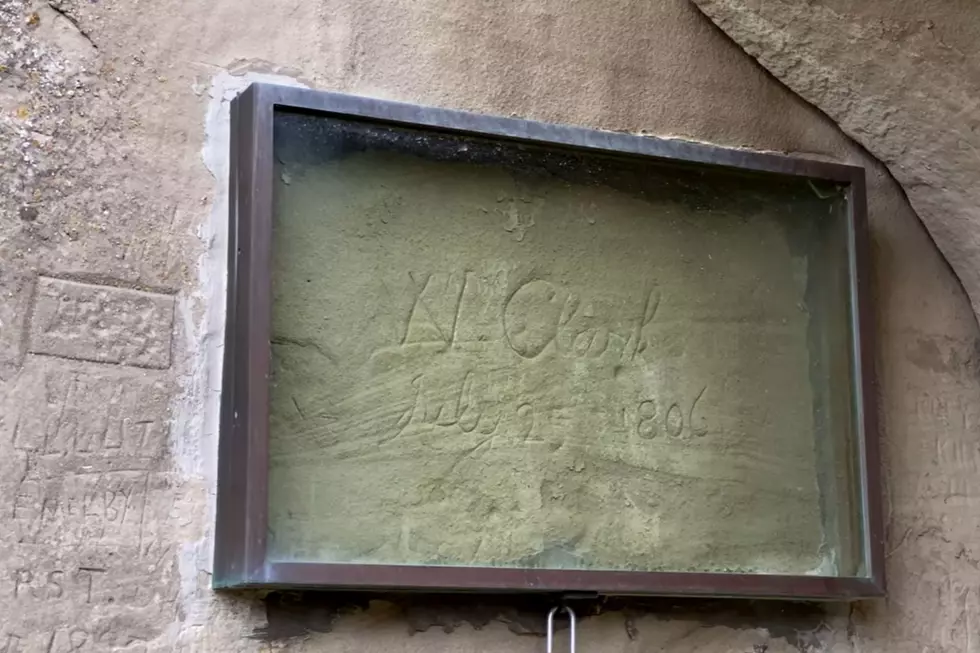
If you've ever stopped at Pompeys Pillar along I-94 east of Billings, you know it's one of Montana's more interesting historic sites. Most kids in south-central Montana have probably gone on a school field trip to Pompeys Pillar, and I've visited a couple of times over the years. It's always amazing to stand where Capt. William Clark carved his name into the sandstone back in 1806.

It's the only remaining physical evidence of the Lewis and Clark Expedition that's still visible in its original location anywhere along the trail. What I didn't know is that behind the scenes, experts have spent more than a decade working to make sure the landmark doesn't slowly crumble away.
Read More: Huntley Homesteader Days Returns With Darryl Worley
The effort began after a massive slab of sandstone broke loose in 2011, crashing near the visitor boardwalk. That event launched years of engineering studies by the Bureau of Land Management to figure out how to stabilize the iconic rock formation without changing its appearance.

A high-tech stabilization job on the famous landmark.
Using advanced 3D modeling, engineers discovered Pompeys Pillar isn't one giant solid rock. Instead, it's made up of enormous sandstone blocks that fit together almost like a giant game of Jenga. Crews carefully removed loose rock, reinforced weak areas, installed hidden drainage systems to keep water from causing more damage, and anchored unstable sections with steel rock bolts concealed inside the formation.

The work wrapped up in 2024, and unless someone told you about it, you'd probably never notice anything had changed.

Today, small sensors continuously monitor the Pillar for movement as it naturally expands and contracts through Montana's changing seasons. Thanks to years of careful planning and some impressive engineering, one of our state's most treasured landmarks should be around for many more generations to enjoy.
PHOTOS: Things You'd See in an Everyday 1980s Kitchen
Gallery Credit: Stephen Lenz
10 Famous Movies That Sparked Completely Bizarre Lawsuits
Gallery Credit: Emma Stefansky