Billings Drivers Can Now Check If Flock Cameras Searched Their License Plate
Flock cameras have become one of those topics that can turn an ordinary conversation into a heated debate in about five seconds flat.
Some people see the cameras as another set of eyes helping businesses and police identify stolen vehicles, find missing people, and solve crimes. Others see a system quietly recording where innocent people travel, then placing that information into a database that could be searched or misused.
Both reactions make sense to me. I want law enforcement to have tools that help catch criminals and bring missing people home. I also do not love the thought of my vehicle being tracked as I take my son somewhere, go to church, shop for groceries, or simply live my life.
Now, a website is giving drivers a small window into how the Flock system has been used.
How to Check Whether Your License Plate Was Searched by Flock
A website called Have I Been Flocked allows drivers to search available Flock audit logs by entering their license plate number.
The records were obtained from government agencies through public records requests. Some agencies also publish edited versions of their records through transparency portals.
According to the Have I Been Flocked frequently asked questions, the website does not save, store, or log the license plate numbers people enter. The search is completed, and the information entered is immediately discarded.
What a Have I Been Flocked Search Result Actually Means
This matters because the website does not tell you whether your vehicle passed a Flock camera.
It also will not show you a picture of your vehicle, reveal where it was seen, or tell you what information the camera returned.
Instead, Have I Been Flocked searches records showing whether someone entered your plate number into the Flock system. In other words, it may tell you that someone searched for your vehicle, not that a camera photographed it.
A result also does not automatically mean you were suspected of a crime. The person who performed the search may not have been a police officer, and rules for using the system can vary by agency.
There is another big limitation. The database is incomplete because only some agencies release their audit logs, and some released records are heavily edited. If your plate doesn't appear, that doesn't prove it was never searched.
What Information Do Flock License Plate Cameras Collect
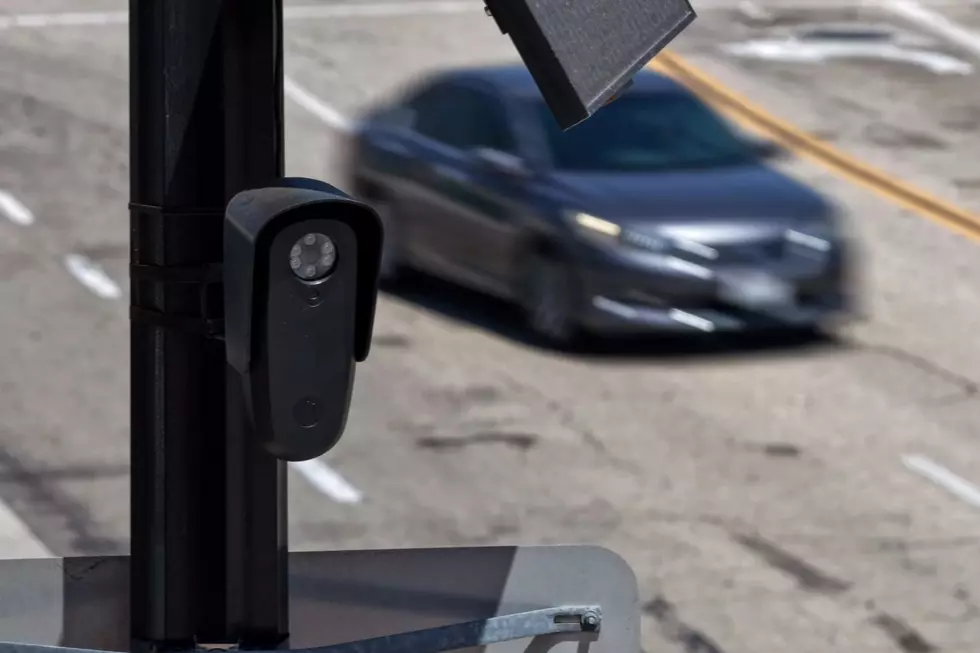
Flock cameras are automated license plate readers, often called ALPRs. They can capture a vehicle's license plate, color, make, model, direction of travel, location, and the date and time it passed the camera.
Some can also identify details such as bumper stickers, roof racks, dents or other features that may help distinguish one vehicle from another. KTVQ reported that Flock cameras used by Billings retailers can identify details including a vehicle's make, model, color, bumper stickers and dents.
The Electronic Frontier Foundation explains how automated license plate readers collect and store vehicle information. These cameras photograph the license plates that come into view, not only plates belonging to people suspected of crimes.
When records from multiple cameras are combined, they can reveal where a vehicle has traveled and establish patterns over time. That is exactly where the disagreement begins.
Why Supporters Believe Flock Cameras Make Communities Safer
There is a strong argument for this technology. If a child is missing, a vehicle is stolen, or someone leaves the scene of a serious crime, time matters. A camera that can identify a vehicle and show where it traveled may give investigators a lead much faster than traditional police work alone.
Private retailers also use the cameras to investigate theft and other crimes on their properties. In Billings, KTVQ reported that businesses including Home Depot and Lowe's were using privately owned Flock cameras.
Those businesses may choose to share relevant information with police when a crime occurs. According to Flock Safety, its cameras and software are designed to help communities, businesses, and law enforcement identify vehicles connected to crimes.
For people who support the cameras, the question is simple. If the technology can help recover a stolen car, identify a dangerous suspect or bring a missing person home, that is a powerful argument for keeping it in place.
Why Flock Cameras Are Raising Serious Privacy Concerns
The concern is not necessarily that a camera reads one license plate. It is what becomes possible when thousands of cameras feed vehicle information into a searchable network.
One camera may show that your vehicle entered a parking lot. A collection of cameras could potentially show where you shop, where you worship, which doctors you visit, where you work, and how often you visit another person's home. Most people whose vehicles are recorded have done absolutely nothing wrong.
The Electronic Frontier Foundation warns that license plate reader data can reveal visits to health centers, places of worship, protests, immigration clinics, gun shops and other sensitive locations.
Critics argue that this creates a record of ordinary people's movements first, with questions about whether the information is needed coming later. They also worry that access to a large database can stretch well beyond the original reason a camera was installed.
It is one thing to use a camera to investigate a reported theft at a store, but it feels very different if that same information can be searched across communities or used to reconstruct someone's private routine.
Reports of Flock Camera Misuse Are Fueling the Debate
The fear that someone could misuse the system is not hypothetical.
In August 2026, Mooresville, North Carolina, police officer Elizabeth Snowman was arrested after an internal audit reportedly found she had accessed Flock data 31 times to track her boyfriend's former wife for personal reasons.
ABC News reported that Mooresville Police Chief Ron Campurciani confirmed the officer was arrested and charged, and that at least two of the searches were performed while she was off duty.
Cases like that are why people have such strong feelings about who should have access, what justification should be required, and how every search should be reviewed. A tool can be created for a legitimate public safety purpose and still cause harm when it falls into the wrong hands or is used without enough oversight.
Flock Safety Announces New Privacy and Accountability Rules
Flock Safety CEO Garrett Langley recently announced several changes scheduled to take effect January 1.
According to an Associated Press report on Flock Safety's planned changes, law enforcement customers will be required to use an auditing tool designed to detect abnormal search behavior. A user could be locked out while suspicious activity is reviewed.
The company also plans to reduce its standard data storage period from 30 days to seven days. Information connected to a case number may be preserved longer.
The American Civil Liberties Union described the changes as a step in the right direction but said serious concerns remain about access to private location information.
Those changes may help, but the larger question remains whether access to a person's past movements should require approval from a judge rather than an internal search reason.
Are There Flock Cameras in Billings, Montana
Yes, privately operated Flock cameras have been documented in Billings.
The independent DeFlock camera map currently shows reported license plate reader locations around Billings. Another independent database lists reported Flock camera locations across Montana.
At the time of publication, DeFlock appeared to show about two dozen Flock or similar license plate reader locations around Billings. However, these maps are independently maintained, locations can change, and I have not personally visited every listed site to confirm that each camera is present and active.
KTVQ confirmed privately owned Flock cameras were being used by retailers in Billings. In its December 2025 report, law enforcement agencies in Yellowstone County said they were not using Flock cameras themselves.
Private camera owners can decide whether to share relevant information with law enforcement. That distinction matters because seeing a Flock camera in Billings does not necessarily mean it belongs to the Billings Police Department or Yellowstone County Sheriff's Office.
Montana Law Places Limits on Police License Plate Reader Data
If a Montana law enforcement agency uses automated license plate readers, state law places limits on the technology.
KTVQ reported that Montana law generally limits how long law enforcement may store license plate reader data to 90 days. Agencies must also establish policies covering training, access and how the cameras and information are used.
Those rules provide some protection, but they do not erase every question surrounding private cameras, shared information, database access and searches performed outside Montana.
Flock Cameras Force a Difficult Safety and Privacy Conversation
I don't think this issue fits neatly into a simple good or bad box.
A camera helping locate a stolen vehicle is a good thing. A system being used to secretly track someone for personal reasons is frightening. Both can be true at the same time.
The real conversation should be about limits: who can search the database, what reason they must provide, how long the information is stored, who checks that the stated reason is legitimate, what happens when someone abuses access, and whether an innocent person can learn that their vehicle was searched.

Technology tends to arrive before the rules surrounding it are fully settled, and Flock cameras are already here, including on private property in Billings. For me, that is reason enough to keep asking these questions now rather than waiting until something goes wrong closer to home.
Flock Announces 12 Big Changes to Their Policies
Gallery Credit: Chris Cardenas
Top Reasons Police Officers Issue Tickets
Gallery Credit: Traci Taylor